Optimization algorithms
Mixed-integer nonlinear, stochastic, and fairness-constrained optimization.
Ph.D. Student
Computational Applied Mathematics and Operations Research
Rice University Houston, Texas
I develop optimization algorithms and computational methods for challenging decision problems. My work focuses on mixed-integer nonlinear optimization, mathematical optimization, machine learning, and scientific computing.
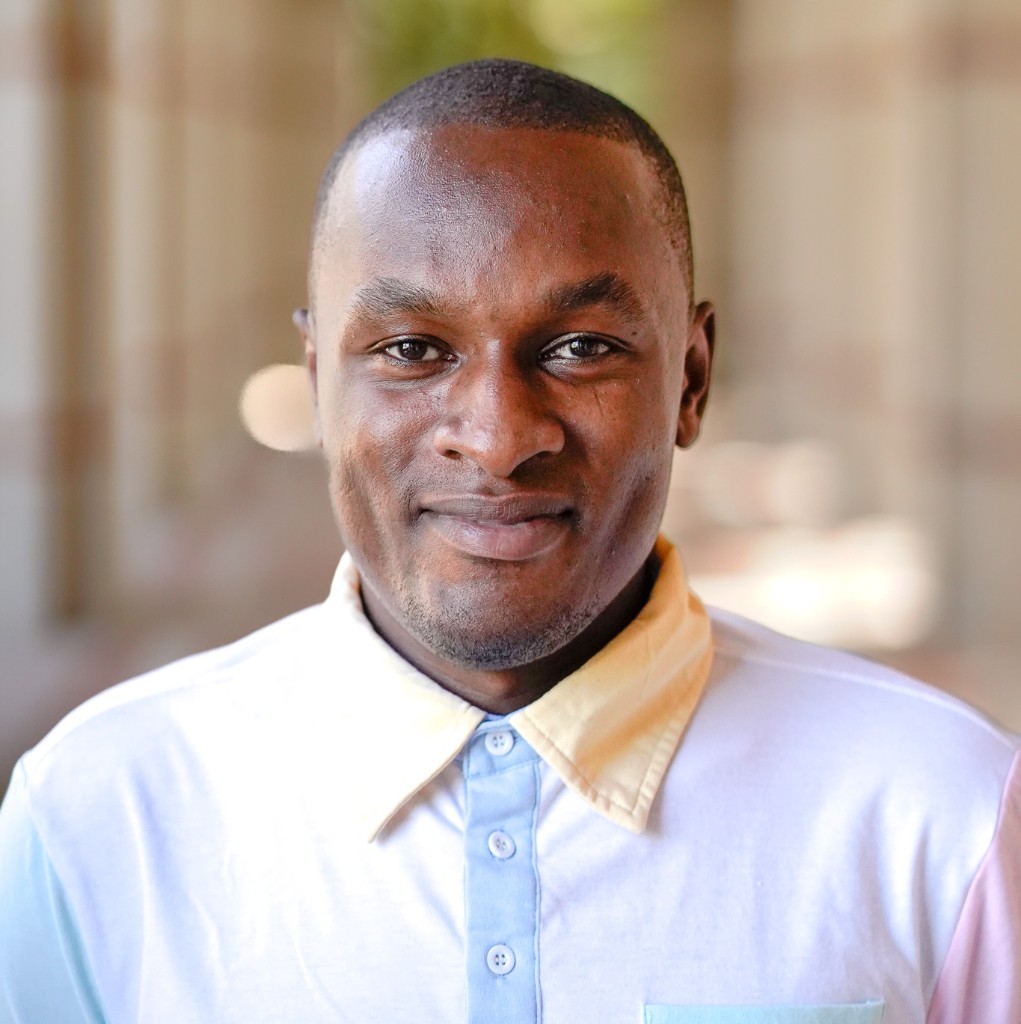
I am a Ph.D. student in Computational Applied Mathematics and Operations Research at Rice University, advised by Professor Illya V. Hicks. My research focuses on mathematical optimization, mixed-integer nonlinear optimization, and machine learning. I develop computational methods—including bound tightening, convex relaxations, cutting planes, and decomposition—for challenging decision problems in energy systems, symbolic regression, and scientific computing.
Mixed-integer nonlinear, stochastic, and fairness-constrained optimization.
Bound tightening, convex relaxations, cutting planes, decomposition, and branch-and-bound methods.
Energy systems, symbolic regression, multi-fidelity modeling, and scientific decision-making.
Naboth, S., and I. V. Hicks. “Weighted, Dynamic, and Endogenous Fairness in Mathematical Optimization.” Manuscript in preparation.
Naboth, S. “A New Approach for Automatic Defect Detection via Thermal Image Processing and Deep Learning Tools.” Master’s thesis, University of L’Aquila.
Rice University
Develop algorithms for mixed-integer nonlinear, stochastic, and fairness-constrained optimization. Implement and benchmark computational methods using Python, Julia, Gurobi, and SCIP.
Summer Engineering Innovation Program, Rice University
Develop an AI-assisted scholarship platform using specialized language-model agents, document analysis, retrieval-augmented generation, and personalized application workflows.
Ph.D., Computational Applied Mathematics and Operations Research
Expected May 2028M.S., Financial Engineering
M.S., Mathematical Modelling
B.S., Mathematics
Rice University Graduate Student Association
Represented CMOR graduate students and supported initiatives in graduate engagement, professional development, and academic experience.
A practical introduction to how stronger variable bounds improve relaxations, computation, and model reliability.
Simple habits that make computational results easier to inspect, compare, and reproduce.
I welcome conversations about research, collaboration, internships, and applied optimization projects.